Your Basket is Empty!
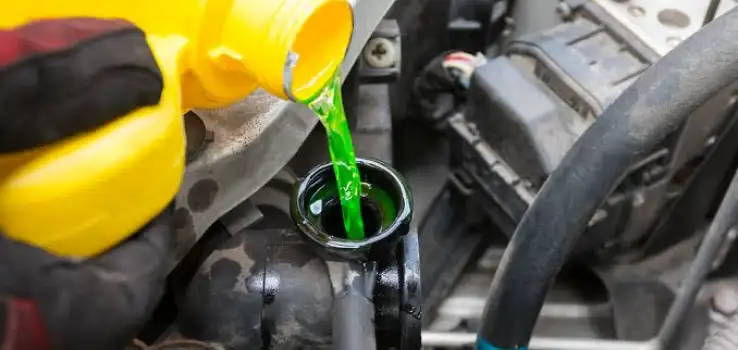
Coolant Flush vs Coolant Top-Up
Coolant Flush vs Coolant Top-Up – What's the Difference?
Your vehicle's cooling system plays a vital role in keeping the engine at the correct operating temperature. Whether you're driving through city traffic, cruising on the motorway or sitting in a queue on a hot summer's day, the coolant circulating through the engine helps prevent overheating, protects vital engine components and ensures reliable performance.
Many drivers know they should occasionally check the coolant level, but fewer understand the difference between a coolant top-up and a coolant flush. Although both services involve the engine coolant, they serve very different purposes. Knowing when your vehicle needs a simple top-up and when it requires a complete coolant flush can help prevent overheating, avoid costly engine repairs and extend the life of your cooling system.
In this guide, we'll explain the difference between a coolant flush and a coolant top-up, when each service is needed, the warning signs of cooling system problems and why regular maintenance is essential for every vehicle.
What Is Engine Coolant?
Engine coolant, also known as antifreeze, is a specially formulated liquid that circulates through the engine and radiator.
Its main functions are to:
- Prevent the engine from overheating.
- Protect against freezing in cold weather.
- Prevent internal corrosion.
- Lubricate the water pump.
- Help maintain a stable operating temperature.
Modern engine coolants are typically a mixture of antifreeze and deionised water, designed to provide year-round protection.
How Does the Cooling System Work?
The cooling system removes excess heat generated by the engine.
The process works as follows:
- Coolant absorbs heat as it circulates through the engine.
- The heated coolant travels to the radiator.
- Air flowing through the radiator removes heat from the coolant.
- The cooled liquid returns to the engine.
- The cycle repeats continuously while the engine is running.
If coolant levels become too low or the coolant deteriorates over time, the system cannot operate efficiently.
What Is a Coolant Top-Up?
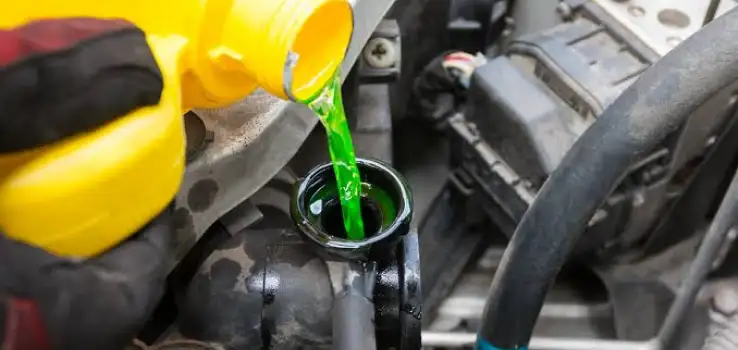
A coolant top-up is exactly what the name suggests—it involves adding fresh coolant to the expansion tank to restore the coolant level to the manufacturer's recommended mark.
A top-up is appropriate when:
- The coolant level has dropped slightly.
- The coolant is still clean and in good condition.
- There are no signs of contamination.
- The cooling system is operating normally.
A top-up restores the correct fluid level but does not replace the old coolant already inside the system.
What Is a Coolant Flush?
A coolant flush is a much more comprehensive maintenance procedure.
Instead of simply adding more coolant, the technician:
- Drains the old coolant completely.
- Flushes the cooling system to remove old fluid, rust, scale and debris.
- Inspects the system for leaks or damaged components.
- Refills the system with fresh coolant that meets the manufacturer's specification.
- Bleeds any trapped air from the system.
- Checks the system is operating correctly.
A coolant flush completely renews the cooling system and restores its protective properties.
Coolant Flush vs Coolant Top-Up – What's the Difference?
| Feature | Coolant Top-Up | Coolant Flush |
|---|---|---|
| Purpose | Restores coolant level | Replaces all coolant in the system |
| Old Coolant Removed | No | Yes |
| Removes Rust & Debris | No | Yes |
| Replaces Protective Additives | No | Yes |
| Time Required | Usually 10–20 minutes | Typically 45–90 minutes |
| Recommended When | Coolant level is slightly low | Coolant is old, contaminated or due for replacement |
A coolant top-up is a quick maintenance task, while a coolant flush is a preventative service that protects the entire cooling system.
When Does Your Car Need a Coolant Top-Up?
A top-up may be suitable if:
- The coolant level is just below the minimum mark.
- There are no warning lights.
- The engine temperature remains normal.
- The coolant is clean and the correct colour.
- There is no evidence of leaks.
However, coolant should not need frequent topping up. If the level repeatedly drops, it may indicate a leak that requires professional attention.
When Does Your Car Need a Coolant Flush?
A complete coolant flush is generally recommended when:
- The manufacturer's service interval has been reached.
- The coolant appears rusty, dirty or discoloured.
- The cooling system has been repaired.
- Different coolant types have been mixed accidentally.
- The vehicle has experienced overheating.
- Corrosion or deposits are suspected inside the cooling system.
Replacing old coolant restores the additives that protect against corrosion, freezing and overheating.
Why Coolant Doesn't Last Forever
Although coolant is designed to last for several years, its protective additives gradually break down.
Over time, coolant can:
- Lose its corrosion inhibitors.
- Become acidic.
- Collect rust particles.
- Accumulate mineral deposits.
- Become contaminated with dirt and debris.
Old coolant is less effective at protecting the engine and cooling system.
Signs Your Cooling System Needs Attention
Engine Temperature Rising
If the temperature gauge climbs higher than normal, low or degraded coolant may be preventing effective heat transfer.
Coolant Warning Light
Many modern vehicles have a dashboard warning light that indicates low coolant levels or a cooling system issue.
This warning should never be ignored.
Sweet Smell
A sweet smell around the engine bay or inside the vehicle can indicate a coolant leak.
Visible Coolant Leaks
Green, pink, orange or blue liquid beneath your vehicle may be coolant escaping from the system.
Leaks should be repaired before simply topping up the coolant.
Steam from the Bonnet
Steam usually indicates the engine is overheating.
Stop driving as soon as it is safe to do so and allow the engine to cool before seeking professional assistance.
What Happens If You Ignore Old Coolant?
Neglecting coolant maintenance can lead to:
- Engine overheating.
- Corrosion inside the radiator.
- Water pump wear.
- Blocked cooling passages.
- Heater matrix problems.
- Head gasket failure.
- Expensive engine repairs.
Routine coolant maintenance is far more affordable than repairing overheating damage.
How Often Should Coolant Be Replaced?
The recommended interval depends on the vehicle manufacturer and the type of coolant used.
As a general guide:
- Many vehicles require a coolant flush every 3 to 5 years.
- Some long-life coolants may last longer.
- Older vehicles may require more frequent replacement.
Always refer to your owner's handbook for the correct maintenance schedule.
Can You Top Up Coolant Yourself?
Yes, but only if:
- The engine is completely cold.
- You use the correct coolant specification.
- The coolant level is only slightly low.
Never remove the coolant reservoir cap while the engine is hot, as the cooling system is under pressure and hot coolant can cause serious burns.
If you're unsure which coolant your vehicle requires, seek professional advice.
Choosing the Correct Coolant
Different vehicles require different coolant formulations.
Using the wrong coolant can:
- Reduce corrosion protection.
- Damage seals and hoses.
- Cause chemical incompatibility.
- Affect cooling performance.
Always use the coolant specification recommended by the vehicle manufacturer.
Why Regular Cooling System Maintenance Saves Money
Routine coolant maintenance helps prevent:
- Overheating.
- Radiator corrosion.
- Water pump failure.
- Heater problems.
- Head gasket damage.
- Costly engine repairs.
A scheduled coolant flush is a relatively inexpensive service that can save thousands of pounds in repair costs over the life of your vehicle.
Why Choose Central Tyres Walsall?
At Central Tyres Walsall, we provide professional coolant top-ups, complete coolant flushes and cooling system inspections for all makes and models. Our experienced technicians use manufacturer-approved coolant, inspect the entire cooling system for leaks and wear, and ensure your engine is protected against overheating, corrosion and freezing throughout the year.
Alongside cooling system maintenance, we also offer Interim, Full and Major Car Servicing, brake repairs, Hunter Wheel Alignment, tyre fitting, wheel balancing, battery replacement, AdBlue top-ups, locking wheel nut removal and a comprehensive range of vehicle maintenance services. With honest advice, transparent pricing and high-quality workmanship, we help keep your vehicle running safely, efficiently and reliably.
Contact Central Tyres Walsall
Address:
29 John Street
Walsall
WS2 8AF
United Kingdom
Phone: 01922 625339
Email: [email protected]
Whether your vehicle simply needs a coolant top-up or it's due a complete coolant flush, the team at Central Tyres Walsall is here to help. Book your cooling system inspection today and keep your engine protected against overheating, corrosion and costly repairs all year round.
Recent Blogs