Your Basket is Empty!
What Is AdBlue and Why Is It Important for Diesel Cars?
What Is AdBlue and Why Is It Important for Diesel Cars?
If you own a modern diesel vehicle, you've probably seen an AdBlue warning light appear on your dashboard or noticed AdBlue listed as part of your vehicle's maintenance schedule. Despite its name, AdBlue isn't a fuel additive and it doesn't improve engine performance. Instead, it plays a vital role in reducing harmful exhaust emissions and helping diesel vehicles comply with strict environmental regulations.
Many drivers only think about AdBlue when the warning light comes on, but understanding how it works and why it is important can help you avoid unexpected breakdowns, expensive repairs and unnecessary inconvenience.
So, what is AdBlue and why is it important for diesel cars? In simple terms, AdBlue is a high-purity solution of deionised water and automotive-grade urea that is injected into the exhaust system of many modern diesel vehicles. It works with the vehicle's Selective Catalytic Reduction (SCR) system to convert harmful nitrogen oxide (NOx) emissions into harmless nitrogen and water vapour before they are released into the atmosphere.
In this guide, we'll explain what AdBlue is, how it works, why it is essential, how often it needs topping up and the warning signs that your vehicle needs attention.
What Is AdBlue?
AdBlue is a clear, non-toxic and non-flammable liquid specifically designed for diesel vehicles fitted with Selective Catalytic Reduction (SCR) technology.
It consists of:
- 67.5% deionised water
- 32.5% high-purity automotive-grade urea
Although urea is commonly associated with agriculture, the urea used in AdBlue is manufactured to an extremely high automotive standard and should never be confused with agricultural fertiliser.
AdBlue is stored in a separate tank from the diesel fuel tank and is never mixed with the fuel itself.
Why Was AdBlue Introduced?
Governments across Europe introduced increasingly strict emissions regulations to reduce air pollution.
Modern diesel engines produce:
- Carbon dioxide (CO₂)
- Particulate matter (PM)
- Nitrogen oxides (NOx)
While diesel particulate filters (DPFs) help reduce particulate emissions, Selective Catalytic Reduction (SCR) systems were introduced to reduce nitrogen oxide emissions, which contribute to poor air quality and respiratory problems.
AdBlue is a key part of this emissions control technology.
How Does AdBlue Work?
When your diesel engine is running:
- Exhaust gases leave the engine.
- A small amount of AdBlue is injected into the exhaust system.
- The solution mixes with the hot exhaust gases.
- Inside the SCR catalyst, a chemical reaction takes place.
Harmful nitrogen oxides (NOx) are converted into:
- Harmless nitrogen
- Water vapour
This process dramatically reduces harmful emissions and helps diesel vehicles meet modern Euro emissions standards.
Importantly, AdBlue only treats the exhaust gases. It does not enter the engine or mix with diesel fuel.
Which Vehicles Use AdBlue?
Not every diesel vehicle requires AdBlue.
It is commonly found in:
- Euro 6 diesel cars
- Diesel vans
- Light commercial vehicles
- Motorhomes
- 4x4s and SUVs
- Heavy goods vehicles (HGVs)
- Some diesel pick-up trucks
If your vehicle has an AdBlue filler cap—often located beside the diesel filler or under the bonnet—it uses an SCR system.
Your owner's handbook will also confirm whether AdBlue is required.
Why Is AdBlue Important?
AdBlue plays a crucial role in reducing harmful emissions and keeping your diesel vehicle compliant with emissions legislation.
Its main benefits include:
Reduces Harmful NOx Emissions
The primary purpose of AdBlue is to reduce nitrogen oxide emissions, helping improve air quality and reduce environmental impact.
Helps Meet Euro Emissions Standards
Most modern diesel vehicles rely on AdBlue to comply with Euro 6 emissions regulations.
Without it, the vehicle may not meet the required environmental standards.
Protects the SCR System
Keeping the AdBlue tank topped up allows the SCR system to operate correctly, helping prevent unnecessary strain on emissions control components.
Prevents Starting Problems
Most AdBlue-equipped vehicles are programmed not to restart once the AdBlue tank becomes completely empty.
Keeping the system topped up helps avoid this inconvenience.
What Happens If You Run Out of AdBlue?
Your vehicle won't stop immediately if the AdBlue level becomes low.
Instead, you'll normally receive several dashboard warnings as the fluid level decreases.
If these warnings are ignored:
- The vehicle may limit engine performance on some models.
- Once switched off, the engine may not restart until AdBlue has been replenished.
- Continued neglect can place additional strain on the emissions system.
For this reason, it's always best to top up the AdBlue tank before it runs empty.
How Often Does AdBlue Need Topping Up?
The frequency depends on:
- Vehicle make and model
- Engine size
- Driving style
- Annual mileage
- Load carried
- Type of journeys
As a general guide:
- Many cars require an AdBlue top-up every 5,000 to 10,000 miles.
- High-mileage drivers may need more frequent refills.
- Larger commercial vehicles often consume AdBlue more quickly.
Your vehicle's dashboard will usually display a warning when the level becomes low.
Can You Top Up AdBlue Yourself?
Yes.
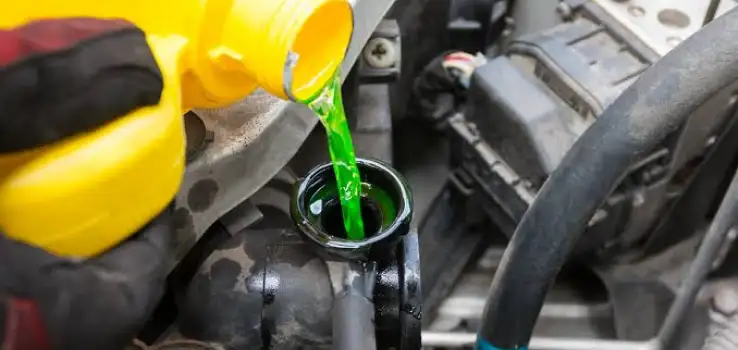
AdBlue is widely available from garages, motor factors and automotive retailers.
However, when topping up yourself:
- Always use the correct automotive-grade AdBlue.
- Avoid contaminating the fluid.
- Never pour AdBlue into the diesel fuel tank.
- Clean up any spills promptly, as dried AdBlue can leave white crystalline deposits.
Many drivers prefer to have the system topped up during routine servicing to ensure the correct quantity is added safely.
Common AdBlue Warning Signs
Your vehicle may display warning messages such as:
- Low AdBlue level
- Refill AdBlue
- AdBlue range remaining
- Engine restart not possible in a certain number of miles
These warnings are designed to give you plenty of time to refill the tank before it becomes empty.
Never ignore them.
Can AdBlue Cause Problems?
AdBlue itself is safe when used correctly, but issues can occur if:
- The wrong fluid is used.
- The AdBlue tank is contaminated.
- The SCR system develops a fault.
- The tank is allowed to run completely empty.
- Low-quality or contaminated AdBlue is added.
Professional diagnosis is recommended if warning lights remain illuminated after refilling.
Does AdBlue Affect Fuel Consumption?
No.
AdBlue is stored separately from diesel fuel and is consumed independently by the SCR system.
It does not replace diesel or increase fuel economy directly.
Its purpose is solely to reduce harmful exhaust emissions.
Does Every Diesel Car Need AdBlue?
No.
Older diesel vehicles without SCR technology do not use AdBlue.
Generally speaking:
- Most Euro 6 diesel vehicles require AdBlue.
- Many older Euro 5 diesel vehicles do not.
If you're unsure, check your owner's handbook or ask a qualified technician.
AdBlue Maintenance Tips
To help your SCR system operate reliably:
- Check for AdBlue warning messages regularly.
- Refill the tank before it becomes empty.
- Use only ISO 22241-compliant AdBlue.
- Store AdBlue in a cool, dry place if keeping spare fluid.
- Have the SCR system inspected during routine servicing.
Simple preventative maintenance helps avoid unnecessary emissions-related problems.
Why Regular Servicing Is Important for AdBlue Vehicles
Routine servicing allows technicians to:
- Check AdBlue levels
- Inspect the SCR system
- Look for leaks or contamination
- Diagnose emissions-related warning lights
- Ensure the vehicle complies with manufacturer recommendations
Regular servicing can help identify potential issues before they become expensive repairs.
Why Choose Central Tyres Walsall?
At Central Tyres Walsall, we provide professional AdBlue top-up services, vehicle servicing and emissions system inspections for a wide range of diesel cars and light commercial vehicles. Our experienced technicians use high-quality AdBlue that meets manufacturer specifications and ensure your SCR system is operating correctly, helping your vehicle remain reliable, efficient and compliant with modern emissions standards.
Alongside AdBlue services, we also offer Interim, Full and Major Car Servicing, brake repairs, Hunter Wheel Alignment, tyre fitting, wheel balancing, battery replacement, coolant drain and refill services, locking wheel nut removal and a complete range of vehicle maintenance solutions. We are committed to delivering honest advice, transparent pricing and exceptional workmanship for every customer.
Contact Central Tyres Walsall
Address:
29 John Street
Walsall
WS2 8AF
United Kingdom
Phone: 01922 625339
Email: [email protected]
If your diesel vehicle has displayed an AdBlue warning or you're unsure when it was last topped up, book an inspection with Central Tyres Walsall today. Our experienced team can refill your AdBlue system, check for emissions-related faults and help keep your diesel vehicle running safely, efficiently and in line with current emissions standards.
Recent Blogs